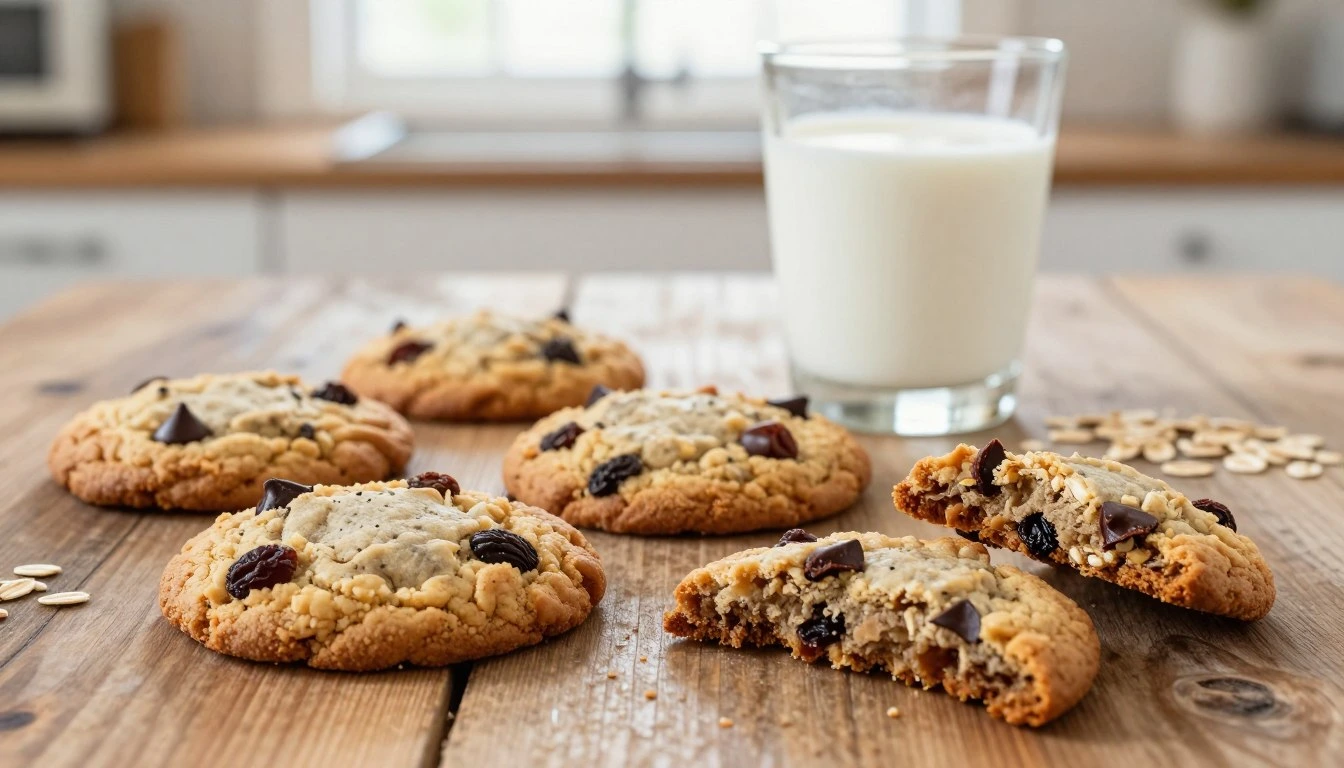
Chewy Oatmeal Cookies Recipe for Soft and Delicious Treats
Do you remember the comforting scent of a warm kitchen on a rainy afternoon? For many, the perfect baked good is more than just a snack. It’s a nostalgic embrace that brings back fond memories of home. Mastering a chewy oatmeal cookies recipe lets you recreate that magic whenever you crave a simple, wholesome indulgence.
Achieving the ideal balance of moisture and texture is the true secret to success. When you combine hearty grains with sweet raisins and crunchy nuts, you create a timeless dessert that satisfies every palate. This guide provides the essential knowledge you need to perfect your own chewy oatmeal cookie recipe with confidence.
Key Takeaways
- Focus on the ratio of wet to dry ingredients for the best texture.
- Use high-quality rolled grains to ensure a hearty bite.
- Proper chilling of the dough prevents spreading in the oven.
- Adding a touch of cinnamon enhances the natural sweetness of the oats.
- Store your finished treats in an airtight container to maintain softness.
The Science Behind the Perfect Chewy Oatmeal Cookies Recipe
Baking is all about chemical reactions that shape your treats. When making a chewy oatmeal cookies recipe, you mix proteins, fats, and sugars. This mix controls the cookie’s feel in your mouth.
Understanding Texture and Moisture Balance
The secret to soft cookies is keeping them moist. Sugars, especially brown sugar, pull in water. This keeps the cookie from drying out too fast.
Fats like butter stop flour proteins from making gluten. This makes the cookie tender, not tough. This balance is key to a great chewy oatmeal cookie recipe.
Why Old-Fashioned Oats Outperform Quick Oats
The oat type changes your cookie’s texture. Old-fashioned oats keep their shape and add a hearty, chewy texture. Quick oats, being smaller, soak up moisture too fast.
Quick oats make cookies mushy or powdery. For the best chew, use rolled oats. Here’s a table showing oat differences in baking.
| Oat Type | Texture Impact | Moisture Absorption | Best Use |
|---|---|---|---|
| Old-Fashioned | Chewy and Hearty | Slow and Steady | Classic Cookies |
| Quick Oats | Soft and Fine | Rapid | Smooth Batters |
| Steel-Cut | Very Crunchy | Minimal | Hot Porridge |
Essential Ingredients for Homemade Oatmeal Cookies
Starting your journey to the ultimate treat means picking the right ingredients. For the best oatmeal cookie recipe, the quality of your ingredients is key. Fresh, high-quality items ensure every batch is perfect.
Selecting the Right Flour and Leavening Agents
All-purpose flour is the foundation of your dough. Measure it carefully to avoid a dry or tough cookie. The right amount of baking soda is also crucial, as it helps the cookies rise.
A pinch of fine sea salt balances the sweetness. This simple step makes your cookies taste professional. Always use fresh leavening agents for consistent results.
The Role of Brown Sugar in Achieving Softness
Brown sugar is key for that chewy texture you love. It adds moisture and a deep flavor to your dough. For the best oatmeal cookie recipe, use more brown sugar than white sugar.
For even chewier cookies, use one whole egg plus one extra egg yolk. The extra fat from the yolk makes the cookies richer and softer. This small change is a big improvement for any classic oatmeal cookie recipe.
Choosing High-Quality Butter and Vanilla Extract
The type of fat you use affects your cookies’ mouthfeel. Choose unsalted, high-quality butter for better flavor control. Real butter gives a depth of flavor that margarine can’t match.
Don’t overlook the importance of pure vanilla extract. Avoid imitation extracts, as they can leave a bad taste. A splash of high-quality vanilla brings all the ingredients together, creating a warm, comforting aroma.
Preparation Techniques for Consistent Results
Getting professional results at home begins before you turn on the oven. When you stick to a classic oatmeal cookie recipe, how you handle ingredients matters. Small changes in your process can greatly improve your results.
Measuring Ingredients with Precision
Accuracy is key in baking. Many struggle with dry or crumbly cookies because of too much flour.
To avoid this, fill your measuring cup with a spoon and level it with a knife. This method stops flour from packing down. It helps keep the right balance for the best oatmeal cookie recipe.
“Baking is a science, and precision is the laboratory equipment that ensures your experiment succeeds every single time.”
The Importance of Room Temperature Components
Don’t rush the process. Cold ingredients can lead to uneven results. Butter and eggs mix best when they’re at room temperature.
- Butter: Should be soft enough to indent with a finger but not melted.
- Eggs: Room temperature eggs incorporate more easily into the fat.
- Consistency: Proper temperature prevents the dough from breaking or separating.
Creaming Butter and Sugar for Aeration
Creaming butter and sugar is crucial for your cookies’ structure. Beating these ingredients together for several minutes adds air bubbles.
This aeration is what makes your classic oatmeal cookie recipe light and soft. If you want the best oatmeal cookie recipe, don’t skip this step. It’s the key to that professional-quality texture you’re aiming for.
Mixing Your Dough for Optimal Texture
Getting your dough right is key to making soft, chewy cookies. When you mix wet and dry ingredients, how you handle the dough affects the texture of your cookies.
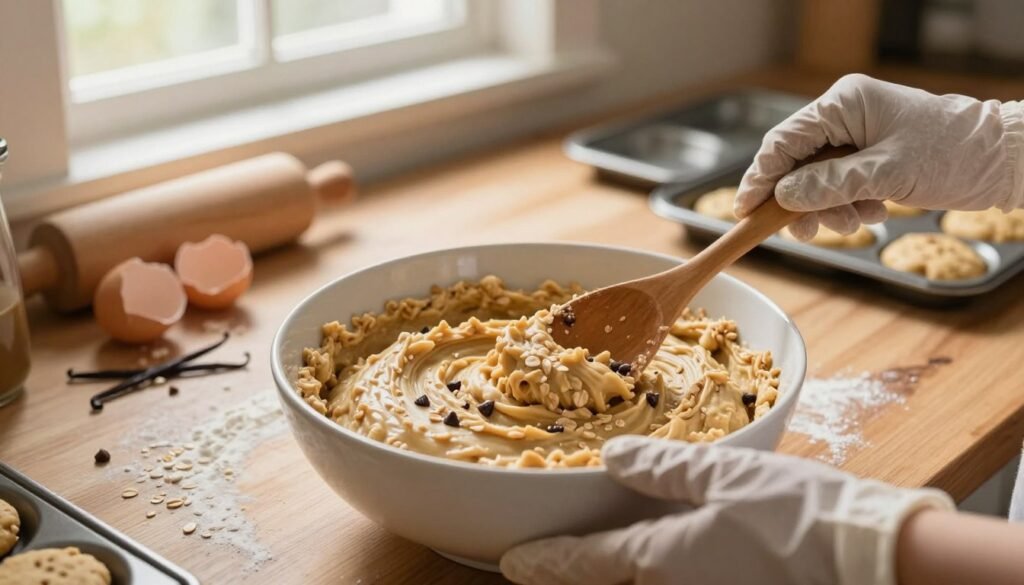
Folding in Oats and Add-ins Without Overworking
When adding oats, be gentle. Overworking the dough can make cookies tough and chewy.
Use a rubber spatula to mix ingredients slowly. For an easy oatmeal cookie recipe, aim to spread oats evenly without kneading.
Managing Dough Consistency Before Chilling
Your dough should be slightly tacky but not too sticky before chilling. If it’s too dry, you might have added too much flour, a common mistake in oatmeal cookie recipes with raisins.
Adjust the dough’s consistency by ensuring your butter was creamed well. A balanced dough will hold its shape when scooped, making portioning easier.
Why Chilling Your Dough is Non-Negotiable
Chilling your dough is essential. It lets flour hydrate and fats solidify, preventing cookies from spreading too much in the oven.
Without chilling, cookies might lose their soft center. Chilling for at least 30 minutes helps keep them thick and chewy, making them a high-quality treat.
| Mixing Method | Texture Result | Best For |
|---|---|---|
| Hand Folding | Soft and Tender | Oatmeal Cookies |
| Electric Mixer (High) | Tough and Dense | Hard Biscuits |
| Pulse Mixing | Light and Airy | Delicate Pastries |
Mastering the Baking Process for Softness
The secret to a soft, chewy cookie is managing heat during baking. Even with an easy oatmeal cookie recipe, oven conditions matter. Getting it right prevents dry or hard cookies.
Setting Your Oven Temperature for Even Baking
Start with a preheated oven at 350 degrees Fahrenheit. This ensures even heat on the baking sheet. It helps the edges set while keeping the inside moist.
Don’t open the oven door too often in the first ten minutes. Changes in temperature can mess up your cookies. Keeping the door closed helps achieve the perfect bake.
Recognizing the Visual Cues of Doneness
Spotting when cookies are done is key. Don’t just rely on a timer, as ovens vary. Look for these signs for a oatmeal cookie recipe with raisins that’s just right:
- The edges should appear golden brown and firm to the touch.
- The center should still look slightly soft or underbaked.
- The surface should have lost its raw, glossy sheen.
The Cooling Process on the Baking Sheet
Many bakers move cookies to a wire rack too soon. Let them rest on the hot baking sheet for at least five minutes after baking. This step is crucial for the right texture.
The pan’s residual heat helps finish baking. Once they firm up a bit, move them to a wire rack to cool. This ensures they stay soft and delicious for days.
Customizing Your Classic Oatmeal Cookie Recipe
Customizing your treats lets you make a simple oatmeal cookie recipe truly yours. By tweaking a few things, you can turn homemade oatmeal cookies into something special. Trying out different textures and flavors makes your baking unique.
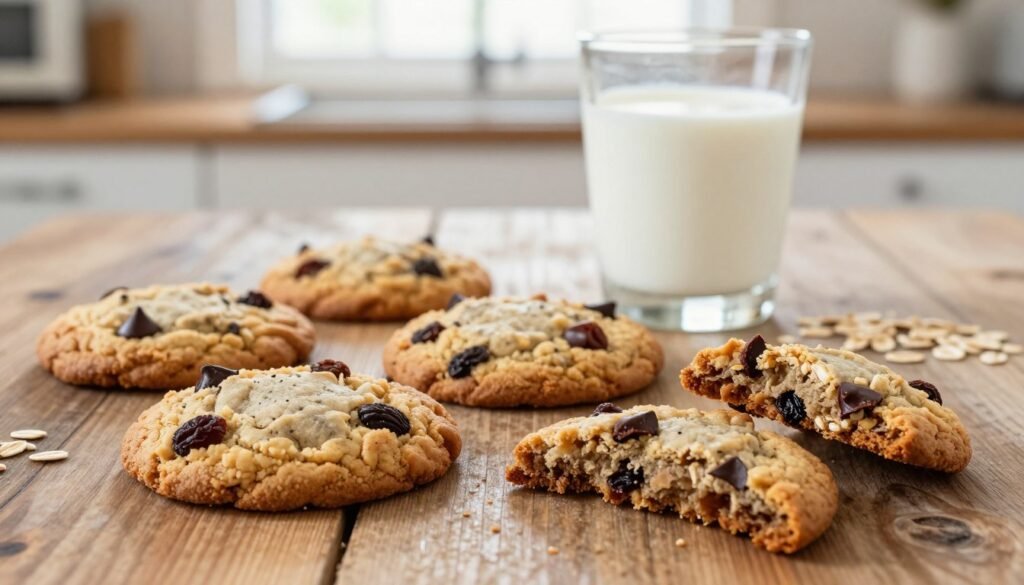
Incorporating Raisins and Dried Fruits
Dried fruits add a sweet chewiness that goes great with oats. To keep them plump, soak your raisins in warm water for ten minutes before mixing them into the dough. This trick stops the fruit from soaking up too much moisture from your cookies while they bake.
Adding Chocolate Chips and Nuts for Variety
For a richer taste, swap raisins for semi-sweet chocolate chips or dark chocolate chunks. Chopped walnuts or pecans add a delightful contrast in texture to the soft dough. Mixing these ingredients can make a treat that’s both decadent and satisfying.
Experimenting with Spices Like Cinnamon and Nutmeg
Spices can take your homemade oatmeal cookies to the next level. A bit of ground cinnamon brings a warm, comforting scent. A pinch of nutmeg adds a subtle, earthy flavor. Adjusting these spices can make your simple oatmeal cookie recipe even more delicious.
Troubleshooting Common Oatmeal Cookie Issues
Even the most seasoned bakers sometimes face challenges when making homemade oatmeal cookies. Whether you’re new or experienced, knowing how to fix small mistakes is key. This way, your cookies will always be tasty and consistent.
Preventing Cookies from Spreading Too Thin
When your cookies spread too much, it’s often because of the temperature. Excessive spreading happens when the butter is too soft or the dough isn’t chilled enough.
- Always chill your dough for at least thirty minutes before baking.
- Ensure your baking sheet is cool before placing the next batch of dough on it.
- Check that your oven temperature is accurate using an external thermometer.
Fixing Dry or Crumbly Dough
Sometimes, your simple oatmeal cookie recipe might result in a dough that feels dry or hard to scoop. This usually happens if you’ve added too much flour or if the oats have soaked up too much moisture.
To fix this, add a small amount of liquid to balance it out. A teaspoon of milk or an extra tablespoon of melted butter can help. Be careful not to add too much, so the dough doesn’t become too sticky.
Adjusting for High-Altitude Baking
Baking at high altitudes needs special adjustments because air pressure is lower. If you’re above 3,000 feet, your cookies might rise too fast and then fall.
Here are some tips to keep your simple oatmeal cookie recipe perfect:
- Reduce the amount of leavening agents like baking soda or powder.
- Slightly increase the oven temperature to help the structure set faster.
- Add an extra tablespoon of flour to provide more stability to the dough.
By making these small changes, you can enjoy perfect homemade oatmeal cookies no matter where you are. Remember, patience and careful observation are key to getting the perfect texture every time.
Storage and Preservation Tips for Freshness
Learning how to store your baked goods can extend their enjoyment. Keeping your soft oatmeal cookies fresh and chewy is easy with the right tips. Follow these simple steps to keep your cookies perfect for days.
Storing Cookies in Airtight Containers
Using an airtight container at room temperature is the best way to keep cookies fresh. This method stops moisture loss, which can make cookies hard. Always let cookies cool completely before storing to avoid steam that can make them soggy.
Freezing Dough for Future Baking Sessions
Freezing your dough is great for baking cookies whenever you want. Scoop the dough into portions and freeze them until firm. Then, put them in a freezer-safe bag to save space. Bake them straight from frozen, adding a minute or two to the baking time.
Reviving Stale Cookies to Restore Softness
Even with the best care, cookies can lose moisture. If your cookies are a bit hard, there’s a fix. Place a slice of fresh white bread in the container overnight. The cookies will soak up the moisture. Or, a quick microwave can make them feel like new again.
| Storage Method | Ideal Duration | Best For |
|---|---|---|
| Airtight Container | 3 to 5 Days | Immediate consumption |
| Freezer (Dough) | Up to 3 Months | Future cravings |
| Bread Trick | Overnight | Reviving soft oatmeal cookies |
Pairing Suggestions for Your Homemade Treats
Discovering the right accompaniments can turn your baking into a gourmet experience. Serving soft oatmeal cookies aims to highlight their warm, spiced notes and chewy texture. Thoughtful pairings make a standard snack into a memorable moment for you and your guests.
Best Beverage Pairings for Oatmeal Cookies
The hearty nature of oats pairs well with beverages that offer a clean or creamy contrast. A classic glass of cold milk is the best choice, balancing the cinnamon and brown sugar in your soft oatmeal cookies. For a warm option, a robust black coffee or spiced chai tea complements the oats’ earthy undertones.
Creating Dessert Sandwiches with Ice Cream
Turn your treats into decadent dessert sandwiches. Place a generous scoop of vanilla bean ice cream or whipped cream cheese between two soft oatmeal cookies. This mix of chewy exterior and cool, creamy center is delightful. For more indulgence, roll the edges in crushed nuts or mini chocolate chips.
Serving Suggestions for Parties and Gatherings
When hosting, presentation is key. Arrange soft oatmeal cookies on a tiered platter with fresh berries or dried fruit for color and sweetness. Consider a DIY cookie bar where guests can top their cookies. These details make your homemade treats the star of any gathering.
Conclusion
Learning to make chewy oatmeal cookies is a fun journey. It mixes science with your creativity. Now, you can make soft, bakery-quality treats at home.
Using top ingredients like King Arthur Flour or Kerrygold butter really helps. Being precise when you mix ensures your cookies are just right.
Your kitchen is a place for tasty experiments. Try new things like different mix-ins or spice blends. This way, you can make a cookie that’s uniquely yours. Sharing these treats brings happiness to your loved ones.
Always have your oven ready for baking. Starting with these basic skills will make you a confident baker. Enjoy making something special every time you bake.
What is the secret to a chewy oatmeal cookies recipe?
The secret lies in using a higher ratio of brown sugar to white sugar and choosing old-fashioned oats for a heartier texture.
How can I make the best oatmeal cookie recipe at home?
Use high-quality ingredients like Land O’Lakes butter and pure vanilla extract. Chilling your dough before baking prevents excessive spreading.
Why are my homemade oatmeal cookies coming out dry?
This usually happens if you over-measure the flour. Use the “spoon and level” method and avoid overbaking. The centers should still look slightly soft when you pull them from the oven.
Is this an easy oatmeal cookie recipe for beginners?
Yes! By following the creaming and folding techniques mentioned, even a novice baker can achieve professional-quality results with this simple oatmeal cookie recipe.
How do I store soft oatmeal cookies to keep them from getting hard?
Keep them in an airtight container at room temperature. Adding a slice of white bread to the container is a pro tip to maintain moisture and keep them soft for days.
Can I use this classic oatmeal cookie recipe to make an oatmeal cookie recipe with raisins?
Absolutely. Simply fold in one cup of raisins during the final mixing stage. For the best results, soak the raisins in warm water for ten minutes beforehand to keep them plump and juicy.
Does chilling the dough really matter for a chewy oatmeal cookie recipe?
Chilling is non-negotiable if you want a thick, chewy texture. It prevents the fats from melting too quickly in the oven, which keeps the cookies from becoming thin and crispy.