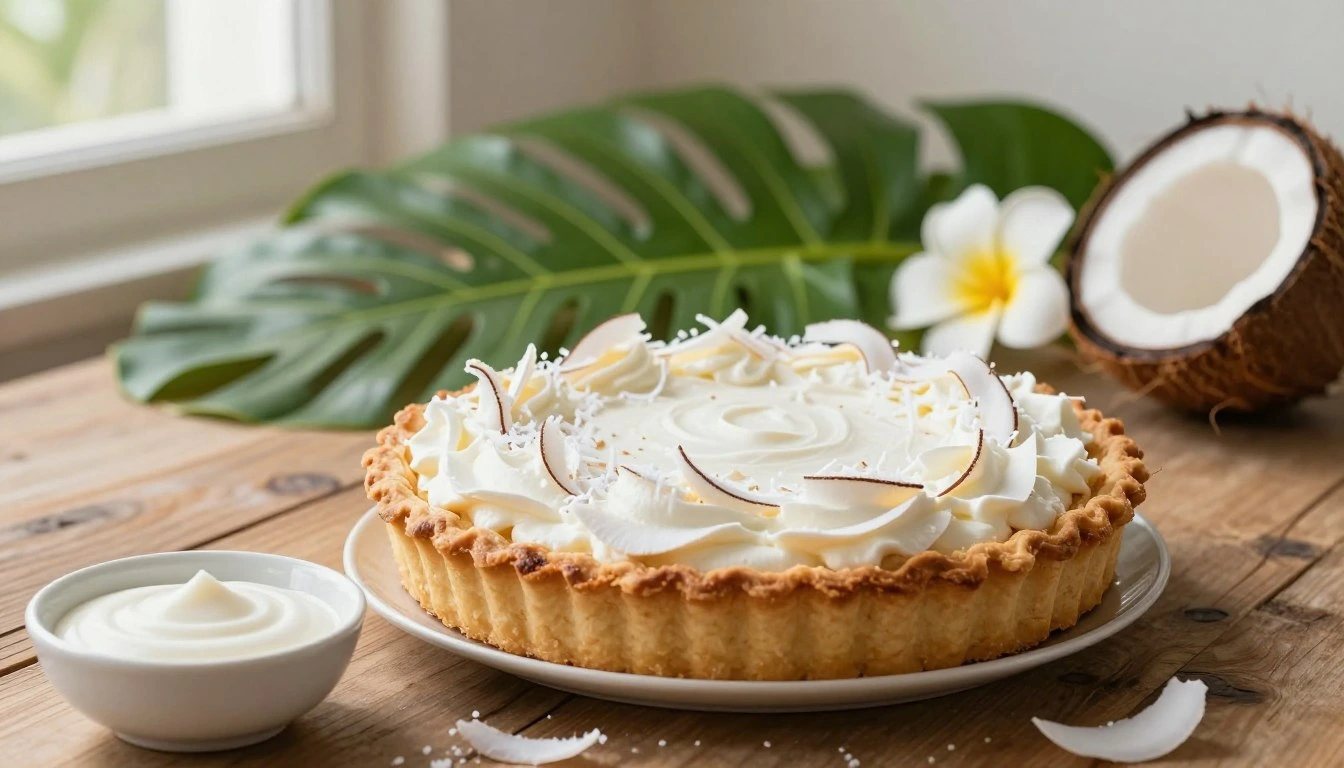
Homemade Coconut Pie with Cream of Coconut
Table of Contents
Homemade Coconut Pie with Cream of Coconut
Do you remember the sweet, comforting scent of a kitchen filled with warmth during the holidays? For many, baking is more than just preparing food. It is a way to create lasting memories with the people you love most.
There is something truly magical about a classic dessert. It balances a silky, tropical filling inside a buttery, golden crust. If you are searching for the perfect treat, our coconut pie recipe with cream of coconut offers an unmatched depth of flavor. It will impress any guest at your table.

In this guide, we will walk you through the simple steps to achieve that signature velvety texture. You will learn how to master the custard base. And how to ensure your crust stays perfectly crisp every single time.
Key Takeaways
- Discover the secret to achieving a rich, tropical flavor profile.
- Learn professional techniques for a smooth, lump-free custard filling.
- Master the art of blind-baking your crust for the perfect crunch.
- Find out how to store your dessert to maintain freshness.
- Get expert tips on choosing the best quality ingredients for your bake.
The Appeal of Homemade Coconut Cream Pie
A homemade coconut cream pie is more than a dessert. It’s an experience that brings together flavors and textures in a special way. Making this pie from scratch is not just about baking. It’s about creating a moment that everyone will remember.
Dessert lovers say, “If you love pastry cream, you’ll love the coconut custard filling.” This shows why homemade coconut cream pie is a must-make. Making it yourself lets you achieve a flavor and texture that store-bought pies can’t match.
Why Scratch-Made Beats Store-Bought
When you make your coconut cream pie from scratch, you control the ingredients. This means every part, from the crust to the filling, is top-notch. This control is key to getting the perfect mix of flavors and textures.
Choosing the best ingredients is a big plus of making it yourself. Using fresh coconut and quality dairy products makes your pie taste better.
| Ingredient | Store-Bought | Scratch-Made |
|---|---|---|
| Coconut | Often desiccated or low-quality | Fresh, high-quality coconut |
| Dairy | May contain preservatives | Fresh dairy products |
The Unique Flavor Profile of Cream of Coconut
The cream of coconut is what makes homemade coconut cream pie special. It adds a creamy texture and a deep coconut flavor. This makes the pie both unique and irresistible.
Cream of coconut is more than a coconut milk substitute. It’s an ingredient that boosts the pie’s flavor and texture. Understanding its role is key to making the pie truly special.
“The addition of cream of coconut elevates the pie to a new level of decadence, making it a true showstopper at any gathering.”
Adding cream of coconut to your recipe makes your pie moist and rich. It also gives it a strong coconut flavor. This will impress anyone who tries it.
Essential Ingredients for Your Coconut Pie Recipe with Cream of Coconut
Making a tasty homemade coconut pie with cream of coconut begins with picking the best ingredients. The quality of your filling and crust depends on what you choose.
The type of coconut you pick is crucial for a great pie. High-quality coconut products improve both taste and texture.
Selecting the Best Quality Coconut
To get a true coconut taste, choose the right coconut. Shredded coconut or coconut flakes are great for the filling and topping. Make sure your coconut is fresh and not stale or rancid.
Coconut cream or cream of coconut can also make your filling richer. Coconut cream is thicker and sweeter, perfect for desserts.
Dairy and Thickening Agents for the Perfect Consistency
Getting the right consistency for your filling is key. Use heavy cream and whole milk for a creamy texture.
For thickening, try cornstarch, flour, or eggs. Eggs thicken the filling and add richness, making it smooth when tempered right.
- Heavy cream and whole milk for a rich texture
- Cornstarch or flour as thickening agents
- Eggs for added richness and smoothness
Mastering the Flaky Coconut Pie Crust
To make a real coconut cream pie, you must get the flaky pie crust right. The crust is more than just a shell; it’s key to the pie’s texture and taste.
Choosing Between Shortcrust and Graham Cracker Bases
For a coconut pie crust, you can pick between shortcrust pastry and graham cracker crust. Shortcrust pastry gives a flaky feel, while a graham cracker crust is crunchy and simpler to make.
It’s up to you to decide which one you like best, based on the pie’s texture you want.
Tips for Achieving a Perfectly Golden Crust
To get a golden crust, pay close attention to detail and use a few special tricks. First, keep your ingredients cold. This is key for the crust’s texture.
The Importance of Chilled Ingredients
Chilled ingredients, like cold butter and ice-cold water, are essential for a flaky shortcrust pastry. Cold butter makes layers in the dough, making the crust tender and flaky.
Blind Baking Techniques
Blind baking, or baking the crust without filling first, makes it golden and crispy. To blind bake, prick the crust’s bottom with a fork and cover it with parchment paper and pie weights or dried beans.
By mastering these techniques and picking the right crust, you’ll make a pie that looks great and tastes amazing.
Preparing the Perfect Coconut Custard Filling
The secret to a creamy coconut pie dessert is its velvety custard. It’s all about finding the right mix of flavors and textures. You want to balance sweetness with coconut flavor for a truly amazing coconut cream pie from scratch.
Balancing Sweetness and Coconut Intensity
Getting the sweetness and coconut flavor just right is key. Start by adjusting the sugar to your liking. But don’t let it overpower the coconut taste. The type of coconut, like shredded or cream, affects the intensity too.
Choosing top-notch coconut products is vital. Fresh coconut flakes give a brighter taste than older ones. Using cream of coconut instead of coconut milk adds richness and depth.
Tempering Eggs for a Silky Smooth Texture
Tempering eggs is crucial for the custard’s smoothness. It means adding the hot coconut mix to eggs slowly while whisking. This keeps the eggs from scrambling and makes the custard silky.
To temper eggs well, pour the warm coconut mix into eggs slowly. Whisk constantly as you do this. This slow heat addition prevents the eggs from cooking too fast. You get a smooth, creamy custard.
Mastering egg tempering and flavor balancing makes your coconut cream pie from scratch both tasty and beautiful.
The Role of Cream of Coconut in Achieving Decadent Texture
Creating a decadent coconut cream pie from scratch requires a special ingredient: cream of coconut. It’s often confused with other coconut products. But its unique qualities make it essential for a rich, creamy pie.
Understanding the Difference Between Coconut Milk and Cream of Coconut
Coconut milk and cream of coconut come from coconuts but are used differently. Coconut milk is a thinner mix of coconut and water, great for soups and sauces. On the other hand, cream of coconut is thicker, sweeter, and more concentrated, ideal for desserts and cocktails.
Coconut milk is thinner and less sweet, while cream of coconut is rich and sweet. This makes cream of coconut perfect for baking. It adds a deep, rich coconut flavor to your pie, something coconut milk can’t match.
How Cream of Coconut Enhances Moisture and Richness
Cream of coconut is key to a moist and rich coconut cream pie. Its high fat content makes the pie creamy and smooth. Here’s how it helps:
- Increases Moisture: Its fat content keeps the pie moist, making it stay fresh longer.
- Enhances Flavor: The pie gets a deeper coconut flavor, making it more decadent.
- Improves Texture: It gives the pie a silky smooth texture, a hallmark of a top-notch coconut cream pie.
Knowing the benefits of cream of coconut and how it differs from coconut milk helps you make an amazing coconut cream pie. It’s sure to wow anyone who tries it.
Step-by-Step Assembly of Your Coconut Cream Pie from Scratch
To make a stunning homemade coconut cream pie, follow these steps. You’ll layer the filling and crust carefully. Make sure the coconut flakes are spread evenly.
Layering the Filling and Crust
Start by getting your workspace ready. Place the baked pie crust on a serving plate or tray. Pour the coconut custard filling into the crust until it’s full.
If you have toasted coconut flakes, sprinkle them over the filling now. This adds texture and makes your coconut pie recipe with cream of coconut look great.
Make sure the crust is cool and the filling is slightly warm. This helps the pie set right. It’s important for the homemade coconut cream pie to stay together.

Ensuring Even Distribution of Coconut Flakes
It’s important to spread the coconut flakes evenly. Start from the center and move outwards. This way, the flakes cover the filling well.
To add more texture and flavor, toast some coconut flakes first. Sprinkling them over the pie makes it more enjoyable to eat.
By layering the filling and crust right, and spreading the coconut flakes evenly, you’ll make a beautiful coconut pie recipe with cream of coconut. It will impress everyone.
Baking and Cooling Techniques for a Stable Pie
Creating a stable pie requires mastering baking and cooling. For your traditional coconut cream pie, the baking method is crucial. You must ensure the crust is perfectly baked and the filling is just right.
Managing Oven Temperatures for Custard Pies
Controlling oven temperatures is key for custard pies. Preheat your oven to the correct temperature and keep it steady. For a traditional coconut cream pie recipe, a moderate oven temperature works best.
Here are some tips for managing oven temperatures:
- Preheat your oven to the specified temperature before placing the pie inside.
- Use an oven thermometer to ensure the temperature remains consistent.
- Avoid opening the oven door too frequently, as this can cause temperature fluctuations.
The Science of Setting the Pie
The science behind setting a custard pie involves the coagulation of eggs and the gelatinization of starches. In your best coconut pie filling, eggs are key to thickening. As the pie bakes, eggs coagulate and starches gelatinize, achieving the right consistency.
Why Proper Cooling Time is Non-Negotiable
Cooling your pie properly is as important as baking it. If you don’t cool it slowly, you might get a soggy crust or an unset filling. The second source emphasizes cooling the pie completely to avoid a soggy bottom.
A well-cooled pie is essential for a clean slice. Here’s a simple cooling process:
- Remove the pie from the oven and let it cool on a wire rack.
- Allow the pie to cool to room temperature.
- Once cooled, refrigerate the pie to chill before serving.
| Baking Stage | Temperature | Time |
|---|---|---|
| Initial Baking | 375°F (190°C) | 15 minutes |
| Final Baking | 325°F (165°C) | 25-30 minutes |
| Cooling | Room Temperature | 2 hours |
By following these baking and cooling techniques, you’ll get a stable and delicious coconut cream pie. Remember, patience is key when cooling your pie, so don’t rush it.
Creative and Delicious Coconut Pie Toppings
Explore the world of coconut cream pie toppings. The right topping can turn a simple dessert into a masterpiece. Each bite becomes a new adventure.
Classic Whipped Cream Variations
Whipped cream is a classic choice for coconut cream pie. Add a teaspoon of vanilla or a sprinkle of cinnamon for extra flavor. For a richer taste, mix in coconut cream or citrus zest.
Toasting Coconut Flakes for Texture and Aroma
Toasting coconut flakes enhances their sweetness and adds crunch. Spread them on a baking sheet and bake at 350°F for 5-7 minutes. Watch them closely to avoid burning. This step boosts the pie’s texture and aroma.

Adding Fresh Fruit or Chocolate Drizzle
Try fresh fruit like strawberries, blueberries, or mango for a refreshing touch. Or, a drizzle of chocolate adds a rich, indulgent flavor. The cold pie and warm chocolate are a perfect match.
Here’s a comparison of different topping ideas:
| Topping | Flavor Profile | Texture |
|---|---|---|
| Whipped Cream | Sweet, creamy | Light, airy |
| Toasted Coconut Flakes | Nutty, sweet | Crunchy |
| Fresh Fruit | Fruity, refreshing | Juicy |
| Chocolate Drizzle | Rich, chocolatey | Smooth |
Try these toppings to make a coconut cream pie that’s just right for you. It’s sure to wow your guests.
Troubleshooting Common Issues with Easy Coconut Custard Pie
When making your easy coconut custard pie, you might run into some problems. But don’t worry, they can be fixed with the right tips. Making a coconut cream pie from scratch is rewarding, but it needs careful attention to avoid mistakes.
Fixing a Runny Filling
A runny filling can be a letdown after baking your coconut custard pie. To avoid this, make sure you use the right mix of eggs and cream of coconut. Also, temper your eggs properly before adding them to the hot cream mixture.
Tempering eggs means slowly adding the hot cream to the eggs while whisking. This stops the eggs from scrambling when mixed with the hot cream.
- Check your oven temperature to ensure it’s not too low, as this can affect the setting of the custard.
- Don’t open the oven door too often, as this can cause the pie to bake unevenly.
- If your filling is still runny after baking, it might need a bit more baking time. However, be cautious not to overbake.
Preventing a Soggy Bottom Crust
A soggy bottom crust can ruin your coconut cream pie. To prevent this, cool the pie crust completely before adding the filling. You can also pre-bake the crust slightly to help it crisp up.
Tips for a crispy crust:
- Pre-bake the crust for a few minutes until it’s lightly golden.
- Use a baking sheet to bake the pie, as this can help the crust cook more evenly.
- Avoid overfilling the pie crust, as excess filling can make the crust soggy.
Managing Curdled Custard
Curdled custard can happen if the eggs aren’t tempered right or if the mixture heats up too fast. To manage this, whisk constantly when tempering the eggs. Also, make sure the mixture isn’t overheated.
Rescuing curdled custard:
- Strain the custard through a fine-mesh sieve to remove any curdled bits.
- If the custard is only slightly curdled, you might be able to save it by whisking it vigorously.
- For severe curdling, it might be best to start over, paying closer attention to the tempering process.
Conclusion
Now you know how to make a homemade coconut pie with cream of coconut. You can use high-quality coconut and follow the techniques from before. This will give you a pie that’s rich, creamy, and delicious.
When you make this pie, remember a few important things. Balance the sweetness and coconut flavor well. Make sure the eggs are tempered for a smooth texture. And use cream of coconut for a rich feel.
Don’t be afraid to try different toppings and flavors. This will make your coconut pie truly unique. With a bit of practice, you’ll make a pie that will wow everyone. So, enjoy the tropical flavors and the joy of making something special.
FAQ
Can I substitute coconut milk for cream of coconut in this coconut pie recipe with cream of coconut?
No, don’t swap them out. Cream of coconut is thicker and sweeter than coconut milk. If you use coconut milk, you’ll need more sugar and a thickener to get the right texture.
How do I ensure I have the best coconut pie filling texture?
For a creamy pie, temper your eggs right and let the custard boil for a minute. This makes the filling smooth and perfect for slicing.
What is the secret to a flaky coconut pie crust?
Keep your fats, like Land O’Lakes butter, cold. Don’t overwork the dough. Blind baking with weights keeps the crust flaky and prevents it from getting soggy.
Is an easy coconut custard pie the same as a cream pie?
No, they’re not the same. Coconut cream pies have a cooked custard in a pre-baked shell. Custard pies are baked with the crust and filling together.
What are some delicious coconut pie toppings I can use for a professional look?
Top your pie with whipped cream, toasted coconut flakes, and sometimes white chocolate or pineapple.
How long does a coconut cream pie last in the refrigerator?
Your pie stays fresh for 3 to 4 days, covered loosely. But the crust might soften after the second day.